RetroCast creates a themed retro board that you drag straight into Miro or Figma. Your retro method, staged in the world of a film your team loves, with your teammates cast in the scene. The team adds their own stickies during the meeting.
Built for product, engineering and design teams, agile coaches, and anyone who runs a regular retrospective.
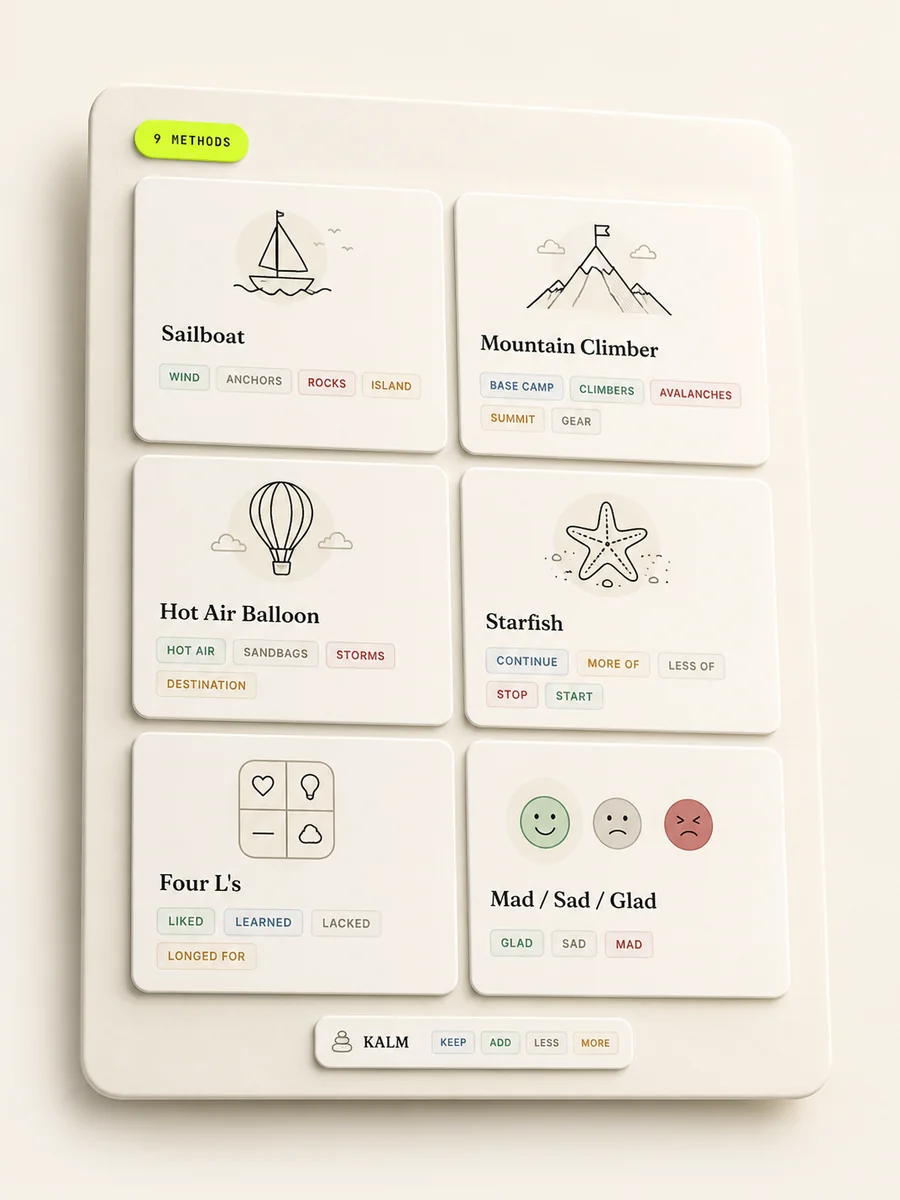
Sprint retro. Project postmortem. Pain & solutions. Health check. Quarterly review. Each method has its own question structure, voting affordances, and sticky-stack layout.
The movie sets the tone, the palette, the stage dressing. A pain-points retro inside The Matrix feels different from the same retro inside Oppenheimer, and that difference changes what people are willing to write.
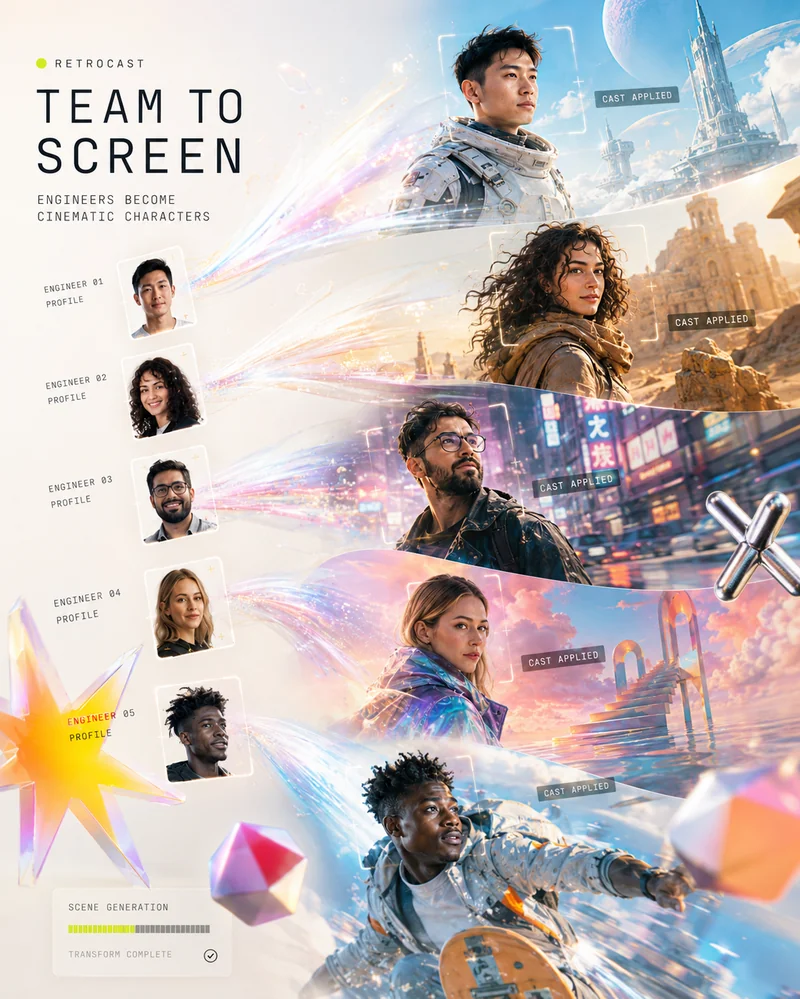
Drop in your team. Each person becomes a character in the frame, name floating beside them, positioned in the world of the movie. They show up before the meeting starts just to see who they got cast as.
Cast 7 of 12 · re-roll any
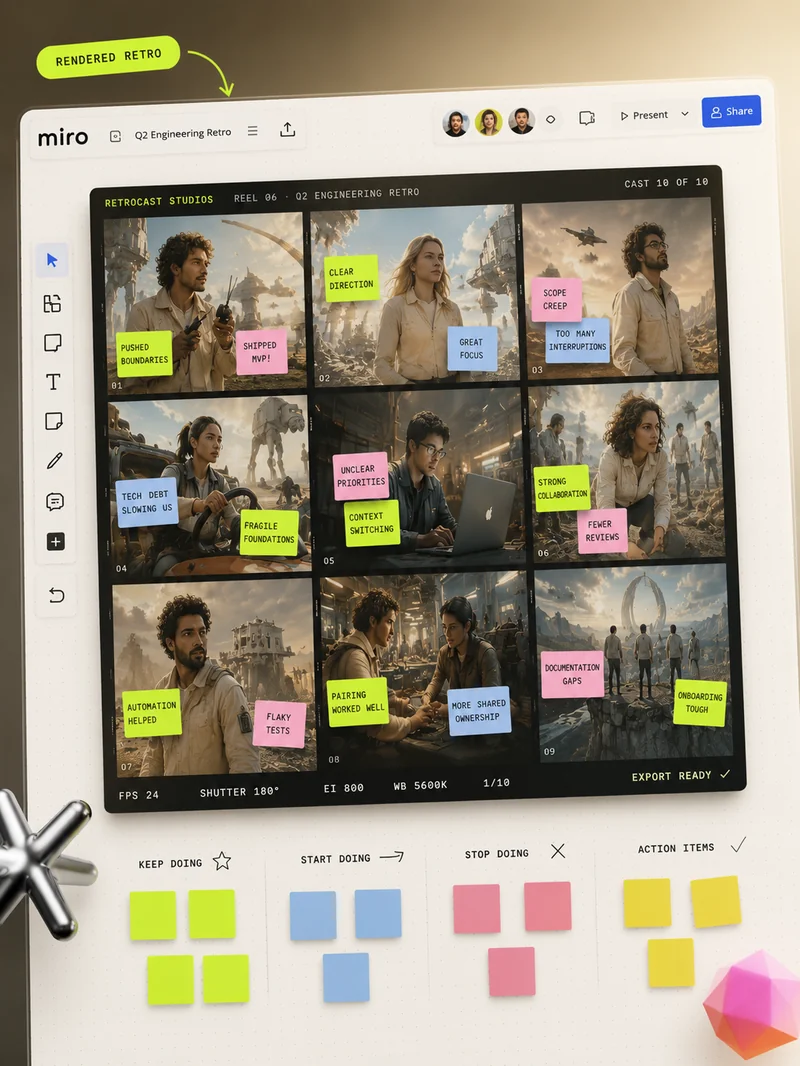
RetroCast renders a complete board: the cast scene as the canvas, prompts laid out beside the right cast members, an empty sticky stack ready to go. Download, drag onto Miro or FigJam, run the retro.
The board is blank, the prompts are stale, and somebody has to facilitate. The same three voices fill the column. The same vague action items get assigned. Two sprints later nothing's changed.
The set is dressed, the cast is in frame, the prompts are pinned. The sticky stack is intentionally empty: the whole point of a retro is what your team writes on the day. We just make sure the room is worth showing up to.
The facilitator builds the board live while everyone watches. Energy gone before the first sticky.
The same three columns every fortnight. The team has answered them already, even if they haven't typed it.
Cameras off, multitasking on. The retro becomes a meeting that happens at the team, not with it.
Anonymity is theatre when only three voices ever post.
By month three, "retro" lands in the calendar like a tax return.
34 themes shipped, new ones added regularly, and requests welcome. Pair any of them with any retro method to set the room before anyone walks in.
Real notes from the private beta, lightly trimmed.
Tool worked really well and the team had a good laugh about their characters.
Clean and vibrant — really cool approach to the mundanity of Miro boards.
Everything teams ask in the first week. Anything we missed? Drop us a line.
It's a high-resolution board image, not an editable template. You drag it onto any Miro or FigJam board and it becomes the canvas: title frame with the agenda, one themed frame per retro category with the prompts in place, and an action-items frame. Your team adds normal stickies on top of the frames during the meeting. Here's the three-step guide.
No. Drag the file onto your board and the whole scene appears. Works on every Miro and FigJam plan.
Stickies are not prefilled. They're added in Miro or FigJam by your team: the plate is finished, the prompts are placed, but the writing happens during the session. That's the whole point of a retro.
Your first board is free. After that you buy credit packs: one credit renders one full board, retries included, starting at $5 for three. No subscription, and credits never expire. Full details on the pricing page.
Yes — request one via the contact form and we'll usually have it in the library within a few days. New films are added regularly.
One credit renders one complete board, and every retry, lead swap and re-roll inside that board is included. Buy as many credits as you need; they never expire.
No. Every frame is an original, AI-generated still inspired by the film's world: its palette, era and atmosphere. Homage, never screenshots. RetroCast isn't affiliated with or endorsed by any studio, and boards are for your team's internal use.